
Cincinnati, OH and Greater Cincinnati
Wood Decks in Cincinnati, OH
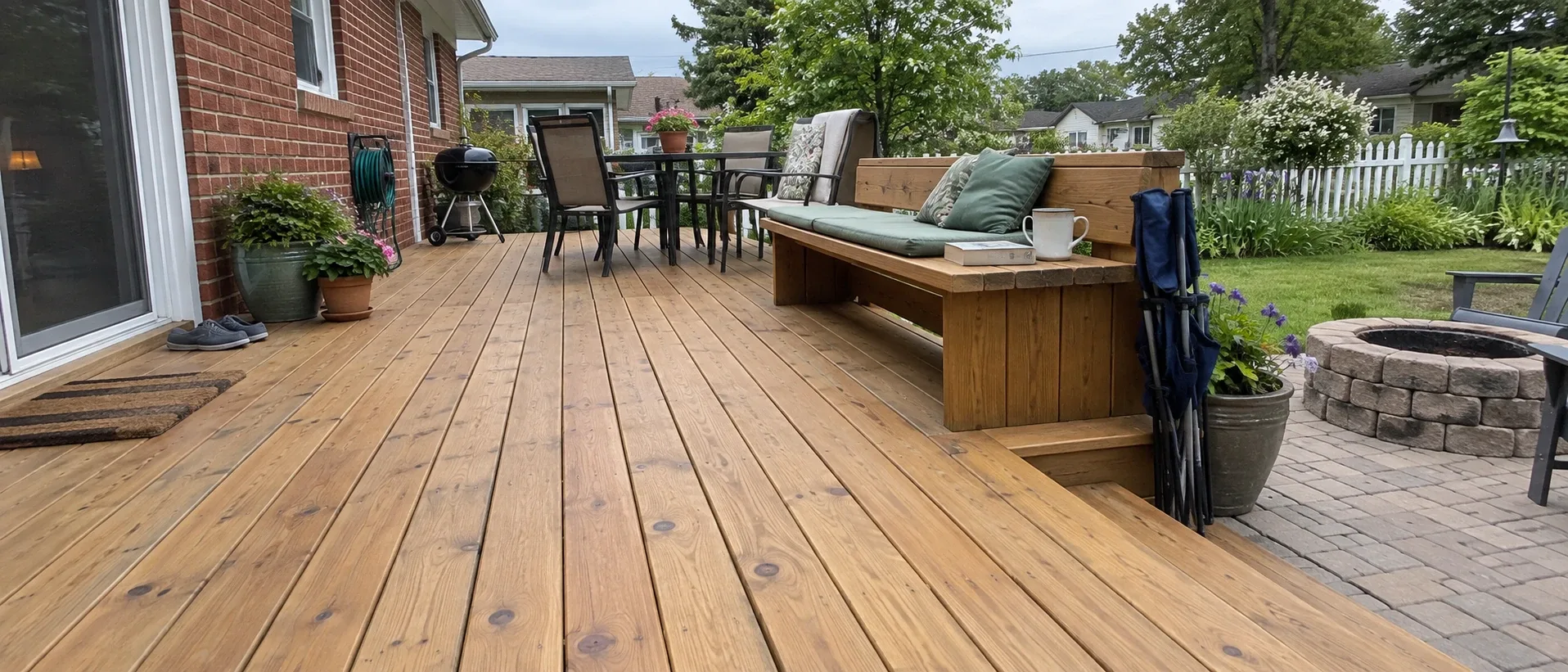
Real wood decks in pressure treated pine and cedar, framed properly and finished so they survive. The most deck you can buy for the money, as long as somebody seals it.
- Footings below the frost line
- Permits and inspections handled
- Written scope before we start
Cincinnati Custom Decks builds pressure treated and cedar decks across Cincinnati and Greater Cincinnati, on poured footings and with the maintenance cycle that keeps them alive rather than the one in the sales leaflet.
A treated deck costs about half what the composite equivalent does installed, and with a finish maintained on it, two decades is a reasonable expectation. Everything depends on that condition being met.
The wood we build with
Pressure treated southern yellow pine
The affordable default for the majority of builds. Strong, inexpensive, available from any yard and it takes stain without argument.
For joists, beams, posts and any member within six inches of the soil we use stock rated for ground contact, and above ground rated material for the boards you walk on. The rating reflects how much preservative the timber carries, and putting the lower grade near soil is the usual reason a frame goes early.
Western red cedar
No chemical treatment is required for cedar to resist rot and insects. It is lighter to handle than pine, moves little through freeze and thaw, and takes a semi transparent stain in a way that shows the grain instead of masking it.
Being softer, it dents where a heavy planter or a steel chair leg rests. Choose it where the deck forms part of the view from inside the house, which is why it fits the mature tree lined streets of Blue Ash and the older homes around Loveland.
Thermally modified ash
A domestic hardwood heated until its cell structure can no longer support rot or insects. Dimensionally stable, dark in tone, and it weathers to an honest grey if left alone. It sits between cedar and the tropical hardwoods on both price and feel, and it is worth pricing if you admire ipe but not the invoice.
Tropical hardwood
The species we use are ipe, cumaru and garapa. Very dense, very durable, and much slower to install because each fastener needs a pilot hole. Left bare it turns silver and keeps going for decades. This is the material for a homeowner who wants the deck to outlast the mortgage.
How we frame a wood deck
Footings and post bases
We form each footing below frost depth, size it to the load the post above will carry, and have it inspected before the concrete goes in. A galvanised standoff base then separates the post from the pad, so the end grain never touches concrete.
A post simply dropped in a hole and backfilled will rot at the soil line somewhere between year twelve and year eighteen, and replacing it means lifting the deck, which on a hillside lot with no machine access is a costly morning.
Ledger connection and flashing
The ledger is through bolted or structurally screwed into the rim joist at the spacing the span table calls for. Over that goes a metal cap, and behind it a self adhering membrane lapped to shed water outward.
A nailed ledger without flashing is the combination that produces most deck failures, and it is the first thing we check on an older property.
Joist tape
A strip of butyl tape runs along the top edge of each joist and beam. On a timber frame that tape is what allows the structure to outlive two rounds of decking.
Hardware throughout
Joist hangers, post to beam connectors, hurricane ties and structural screws, every one of them hot dipped galvanised or stainless. Modern treated lumber contains copper that will attack plain steel, and the wrong fitting inside treated timber fails slowly and quietly until it becomes a real problem.
Finishing, and the maintenance reality
When the first coat goes on
Fresh treated lumber is sold wet. Coating it straight away seals the moisture in and the finish fails early. We recommend letting the boards dry down first, which through a Cincinnati spring or summer usually takes two to four months, and then applying the first coat.
A free test tells you when: sprinkle water on the surface, and if it soaks in rather than beading, the timber is ready.
What to put on it
A penetrating oil based semi transparent stain containing UV blockers is the sensible default here. Film forming products and solid colour deck paint look superb for two summers and then peel, and removing peeled film from 400 square feet of decking ranks among the worst jobs in home maintenance.
The schedule
Wash the deck with a cleaner every spring. Apply a fresh coat every two to three years, sooner if the deck faces south or west. The flat surface suffers far more than the guards do, so the boards need attention long before the railings. Our staining and sealing page sets out the cost if you would prefer not to give up a weekend.
When wood is right, and when it is not
Wood is the sensible choice when the budget sets the limit, when you truly want real grain, when the deck is small enough that upkeep stays easy, or when the house is old enough that a composite surface would look out of place.
That last situation appears constantly around Loveland and on the older streets of Blue Ash, where cedar suits brick and painted trim while a grey composite looks like a later addition.
Wood is the wrong choice when nobody in the household will actually seal it. That is not a criticism, it is simply the strongest indicator of how a deck looks in year eight. If that describes your household, put the extra into composite once and stop thinking about it.
Where we build wood decks
Our wood decks go up across Cincinnati and the surrounding communities, including Mason, West Chester, Anderson Township, Blue Ash and Loveland.
If the deck you have is failing rather than missing, begin with deck repair. A frame worth keeping saves real money and we will tell you plainly whether you have one before you commit to anything.
Deck cost in Cincinnati, OH
Pick the project, enter the size and finish, then read the installed band our estimators work from before a single call is made.
Why homeowners pick Cincinnati Custom Decks
Footings below the frost line
The Ohio River valley swings above and below freezing all winter. Every post we set lands on a poured footing below the local frost depth, which is what keeps a deck level through a decade of heave and thaw.
Permits and inspections handled
We work out which department your address answers to, pull the permit, meet the inspector and hand you the signed card. An unpermitted deck becomes your problem the day you sell the house.
Written scope before we start
Materials, framing spec, hardware, timeline and price in writing before anybody swings a hammer. No verbal change orders.
Wood Decks questions we get asked
What is the best wood for a deck in Cincinnati?
For most homeowners that is pressure treated southern yellow pine, because it delivers a structurally sound deck for the least money and it holds stain well. Western red cedar suits a project where appearance leads and the budget stretches roughly 40 percent further. Framing stays treated whatever surface you choose, with ground contact rated stock wherever a member sits near the ground.
How often does a wood deck need sealing here?
Every two to three years on the horizontal boards, and the first coat should wait until new lumber has dried, usually two to four months after the build rather than the following week. Greater Cincinnati delivers freeze and thaw cycling, strong summer UV and rain in every month, which is harder on a finish than a dry climate or a mild one. A deck that has never been sealed will be checking and shedding splinters by year six.
Will a wood deck splinter?
Treated pine eventually will, especially on a south facing deck that nobody sealed. Cedar produces fewer splinters and they are softer when they appear. Maintaining a finish is the whole defence. If there are young children or dogs in the house and you already know the sealing will not get done, composite is the honest recommendation, and we would rather give it than sell you a timber deck.
Is cedar worth the extra over treated pine?
Where the deck is a visible part of the house, usually yes. Cedar is lighter, stays flatter, carries no chemical smell and takes a semi transparent stain in a way treated pine never quite matches. It is also softer and marks under heavy furniture. On a utility deck you cross on the way to the yard, treated is the better value and nobody will notice the difference from the kitchen window.
Can you build in ipe or another hardwood?
Yes. Ipe and comparable tropical hardwoods are dense, highly rot resistant and survive for decades. The trade off is labour: every fastener needs a pilot hole, the hidden clips must be sized for hardwood, and blades need to be carbide. That pushes installation well above treated or cedar, and we quote it as the premium job it is rather than pricing it like a pine deck.
Do you tape the joists on a wood deck as well?
Yes, and the benefit is larger than most homeowners assume. Water collects in the fastener holes along the top edge of a treated joist, and that edge is where the frame begins to rot. Tape is a tiny share of the build cost and it is the reason a well built treated frame outlasts two sets of its own boards.