
Cincinnati, OH and Greater Cincinnati
Deck Builders in Loveland, OH
Loveland asks a question most towns never raise: which county are you in. A house near the historic centre and a house in a subdivision east of downtown can answer to different permit offices, different setbacks and a different floodplain rule.
- Footings below the frost line
- Permits and inspections handled
- Written scope before we start
Loveland is a river town with two faces, and which one your house belongs to shapes the whole job. Near the historic centre the streets are older, the lots are narrow and the Little Miami Scenic Trail brings walkers and cyclists past the edge of many back yards. Head east and the town opens into subdivisions with bigger lots and far fewer constraints.
The two jobs share a postcode and little else. One is a careful retrofit onto a house with real history. The other is a clean sheet with a budget and a set of association rules.
What the address decides in Loveland
Inside the city limits
The City of Loveland runs its own Building and Zoning Department, and for a house inside the city that is where the permit and the inspections come from. Setbacks, height limits and the drawing set all follow the local code rather than a county general practice.
Hamilton, Warren and Clermont
Loveland reaches into three counties, so a street name can cross a line that changes who reviews the plans. A lot in Hamilton County, a lot in Warren County and a lot in Clermont County do not answer to one office, and the county still carries weight for zoning and for floodplain questions even where the city issues the building permit.
The floodplain along the Little Miami
The river and its valley are the reason floodplain review can move a structure before anything else is settled. Where a lot sits low or backs onto the river corridor, we answer that question first, because it can change the footprint, the finished height and the footing detail at once.
Two kinds of Loveland lot
Older streets near the historic centre
Walk the blocks around the historic centre and much of the housing is a century old or more. Lots are narrow, rear yards are shallow, and original trim and porches set the tone. On these houses a covered porch is frequently the better fit, and a rear deck has to stay low and modest to sit well with the architecture.
Where a deck does go in, we lean toward cedar or a warm composite rather than a cool grey, and we keep the guard proportions close to the house instead of a showroom pattern. The failure here is a structure that is correct in every dimension and still reads as something that arrived on a truck.
Subdivisions east of downtown
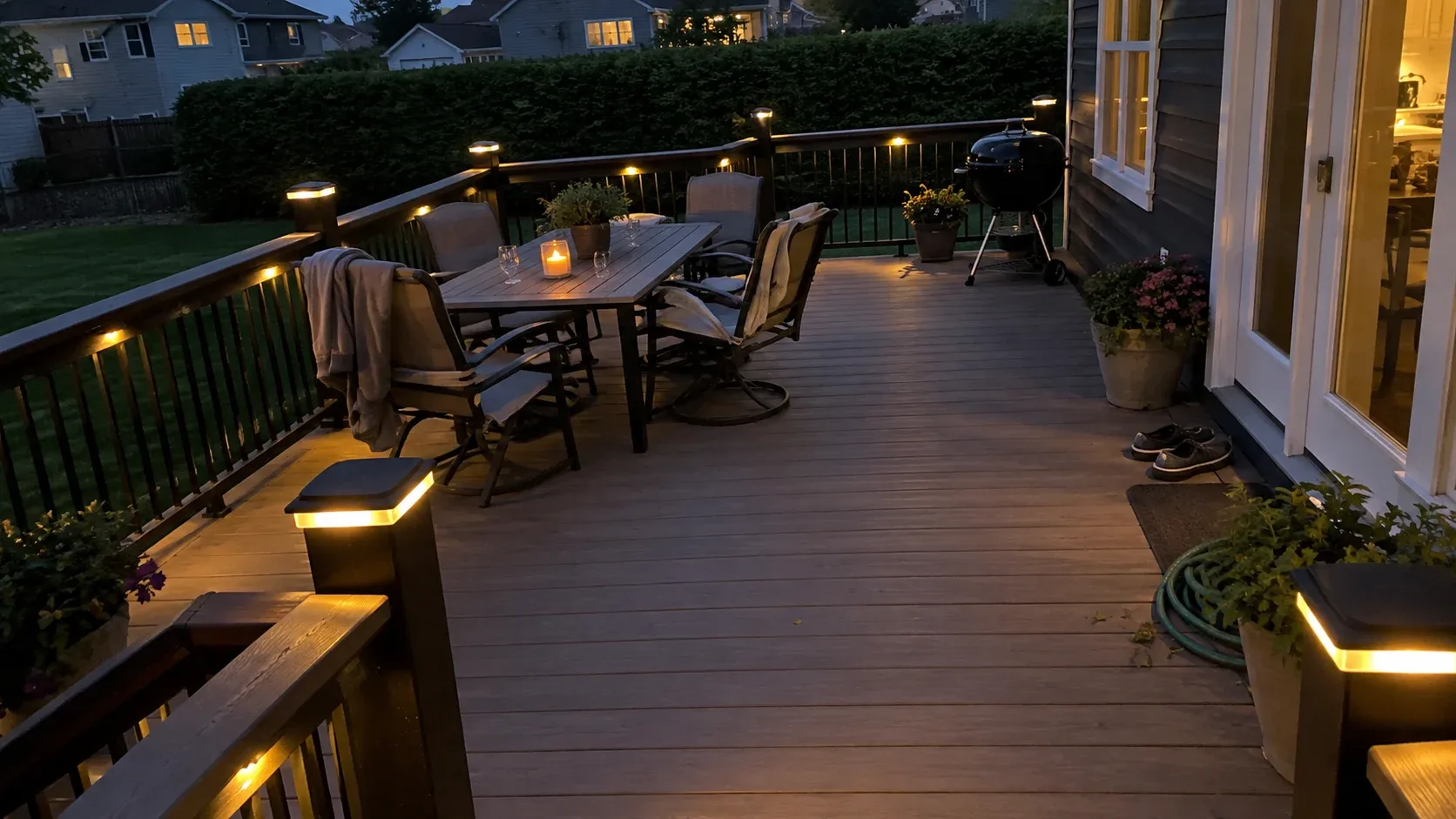
East of downtown the town spreads into newer subdivisions with larger lots and lighter constraints. This is where the standard job lives: roughly three hundred square feet of composite decking, a stair to the lawn and black aluminium railing.
Association review appears in some of these neighbourhoods and it runs on its own calendar, so we prepare the elevation and the material sheet at the same time as the permit drawings rather than afterwards.
Work that comes up most in Loveland
Composite decks
On the newer lots the material choice is rarely argued. The conversation is about size, where the stair lands and whether a covered section goes on now or later. Detail sits on the composite decking page.
Repair and re decking
Loveland carries a solid stock of decks from the eighties and nineties that are now at the point of decision. Where the frame is still sound, re decking runs near a third of a rebuild. Where the ledger or the posts have gone, it does not. Deck repair covers what we inspect before either quote.
Raised decks on sloped ground
Cincinnati ground is seldom flat and Loveland is no exception. A lot that falls away from the house needs a taller frame, longer posts, proper lateral bracing and a stair run that is designed rather than improvised. Related work sits under multi level decks.
Making use of the space below
On a raised deck the ground underneath is often wasted. A paver patio or an under deck system turns it into usable room at a fraction of what extending the frame would cost.
Clay, frost and the details that fail
Two local conditions drive most of the technical choices on a Loveland build.
Heavy clay soil
The Cincinnati and Clermont soil series is heavy expansive clay. It holds water, drains slowly and carries less load than sand or gravel, so footings often need a wider pad than the code minimum. Water is directed away from every post, because a post that sits in saturated clay will move over time.
Freeze and thaw
Loveland sits in USDA zone 6b, milder than much of Ohio, but the river valley swings bring more freeze and thaw cycles than the average suggests. Frost depth runs near 32 inches, and a footing set too shallow will heave across a few winters.
Guards and stairs
Code requires a 36 inch guard above 30 inches of height, with a 4 inch sphere rule on the infill. On the older houses the original stair was often run straight down a grade with no landing and uneven risers, which fails inspection on new work and is a genuine trip hazard on old work.
Getting started in Loveland
We come out, measure, and work out which county and which office your address answers to, then check the setbacks, any association covenants and the floodplain where a watercourse is close. Nothing is priced until that is settled, because jurisdiction and drainage change the number more than the material does.
You get two or three layouts with prices given as ranges and a written scope before anything is committed. The deck cost guide carries the general Cincinnati ranges, and if you would rather see the town alongside the other communities we serve, the Loveland service area entry is the place to start.
Deck cost in Loveland, OH
Pick the project, enter the size and finish, then read the installed band our estimators work from before a single call is made.
Why homeowners pick Cincinnati Custom Decks
Footings below the frost line
The Ohio River valley swings above and below freezing all winter. Every post we set lands on a poured footing below the local frost depth, which is what keeps a deck level through a decade of heave and thaw.
Permits and inspections handled
We work out which department your address answers to, pull the permit, meet the inspector and hand you the signed card. An unpermitted deck becomes your problem the day you sell the house.
Written scope before we start
Materials, framing spec, hardware, timeline and price in writing before anybody swings a hammer. No verbal change orders.
Deck questions from Loveland homeowners
Which county and which office issues my Loveland permit?
It depends on the address. Loveland reaches into Hamilton, Warren and Clermont Counties, and the City of Loveland runs its own Building and Zoning Department for work inside the city limits, so most in town builds are reviewed there. Cross into unincorporated township ground and the county office takes over. We confirm the jurisdiction before we price anything, because the same structure can need different setbacks, different drawings and a different inspection sequence depending on which side of a line the lot falls.
Does a lot near the Little Miami need floodplain review?
Often it does, and it is the first question rather than a late one. The Little Miami and its valley floor put a share of Loveland lots inside a regulated floodplain, and that finding can change the footprint, the finished height and the footing detail all at once. We check the map and, where it applies, the local review path before design, because a structure that has to move after the drawings are done is the expensive way to learn the answer.
Can a century home near downtown still take a deck?
Yes, but the honest answer on many of these houses is a porch rebuild rather than a rear deck. Narrow platted lots and shallow rear yards often suit a [covered porch](/covered-porches) better than a large platform, and that is also what the architecture wants. Where a rear deck does make sense we keep it low, hold the guard proportions close to the house and lean to [cedar](/wood-decks) or a warm composite instead of a cool grey that looks added.
What is different about the newer subdivisions east of downtown?
The lots are larger, the ground is often flatter and the back yard is close to a blank page, which makes the standard job straightforward. Association review turns up in some of these neighbourhoods and it runs on its own calendar, separate from the city or county permit, so we prepare the elevation and the material sheet alongside the permit drawings rather than after them. Composite is the usual choice and black [aluminium railing](/deck-railings) is close to default.
When is the best time to book a Loveland deck?
Late winter, before the spring rush. Permits tend to move faster and a February design conversation usually means an April or May build rather than a July one. We work through the cold months on anything that does not need concrete poured into frozen ground, and in the Cincinnati valley that is most of the year. A floodplain review, where it applies, is one more reason to start early rather than late.