
Cincinnati, OH and Greater Cincinnati
Deck Staining and Sealing in Cincinnati, OH
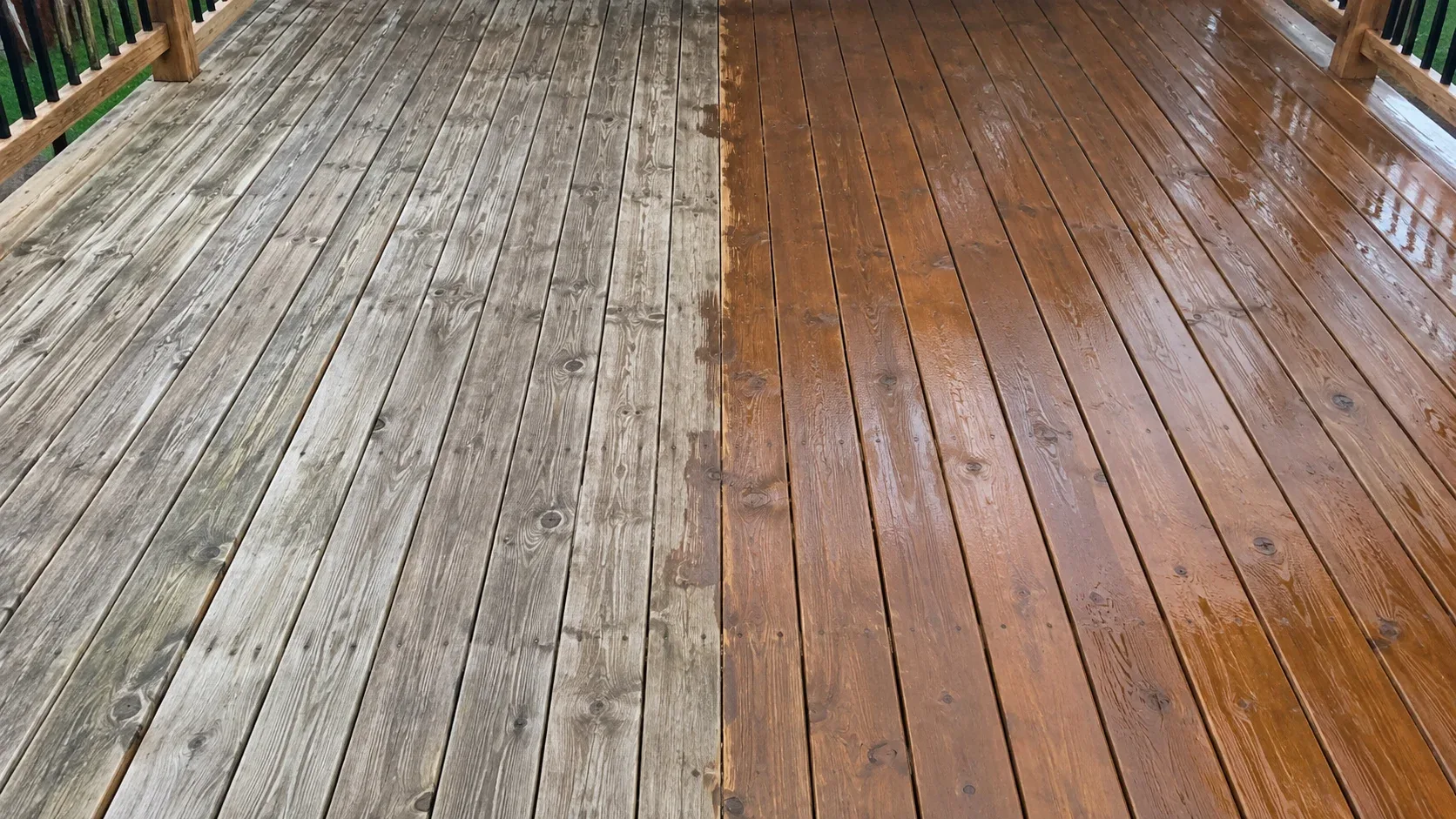
Cleaning, brightening, sanding where the boards need it, then a penetrating finish that lasts through an Ohio winter. The least costly way to keep a timber deck alive.
- Footings below the frost line
- Permits and inspections handled
- Written scope before we start
Cincinnati Custom Decks cleans, brightens and seals timber decks throughout Cincinnati and Greater Cincinnati.
This is the least glamorous service on this site and the one that returns the most per dollar spent. Sealing on a two to three year cycle decides whether a deck still looks presentable at twenty or needs replacing at eight.
What we actually do
Inspect first
Before any liquid touches the timber we note loose boards, fasteners standing proud, soft patches and any movement in the railing. Finishing a board that ought to be replaced wastes the effort, and a deck with a structural problem needs repair before it needs a coating.
Clean
We match the cleaner to the species and to whatever finish is already on the boards, work it in, then rinse at low pressure. Cleaning lifts mildew, algae and the grey surface fibres. The water is present to rinse, not to blast.
High pressure tears open the grain of softwood and leaves precisely the fuzzy surface homeowners then complain about, which is why the least expensive wash in town often leads to an unnecessary sanding job the next year.
Brighten
An acidic brightener neutralises the cleaner and brings the timber’s pH and colour back into balance. Leave this step out and the finish can dry blotchy, because an alkaline surface will not absorb stain evenly and nothing done later will correct it.
Sand where it is needed
Not every deck requires it. Wherever boards show raised grain, mill glaze or traces of an earlier finish, sanding provides a surface the new stain can grip. Railings and handrails receive attention here because they are the parts people touch.
Apply
A penetrating oil based semi transparent stain is our default, applied by brush or roller and then back brushed rather than sprayed alone, so it is properly worked into the grain.
Two thin coats always outperform one heavy coat. A heavy coat that cannot soak in leaves a tacky film that never cures correctly, and during a humid Cincinnati June that can persist for weeks.
Cure
Keep furniture and foot traffic off the deck for a day or two, depending on temperature and humidity. Afterwards, set pots on feet rather than flat against the boards where they hold water underneath.
Choosing a finish
Clear sealer
It sheds water and does next to nothing about ultraviolet light, so the deck still greys, only more slowly. It is cheap and it needs redoing most often. A sensible choice for a covered porch that never receives direct sun.
Semi transparent stain
Pigment for UV defence while the grain remains visible. Most decks in this climate get this recommendation, and it offers the best available balance of appearance, protection and time between coats.
Semi solid and solid
More pigment, greater coverage, less visible grain. Helpful on an older deck whose boards no longer match, or on one that carries an existing coating. Bear in mind that the thicker the film a product builds, the more likely it is to peel instead of wearing away.
What to avoid
Deck paint and heavy film forming products. They look superb for two seasons and then lift, and removing 400 square feet of peeled film is the worst job in this trade by a wide margin.
What it costs, and why railings change the number
Square footage on the deck surface is simple to price. Railings are not. A guard has two faces plus a top and bottom rail, and each baluster presents four sides.
A 40 foot run can hold more coatable area than the deck inside it, and it takes much longer per square foot because none of it can be rolled.
That is the main reason a finishing quote for a deck with heavy timber guards surprises people, and one of the stronger arguments for switching to aluminium railings, which require no coating at all.
When finishing is not the answer
Deeply checked boards, cupped boards, or boards throwing splinters that sanding cannot remove will not be rescued by any finish. Replacing the decking over a sound frame costs more than staining and it is the correct spend.
When we visit we will tell you which of those two situations you are in, and that visit costs nothing either way.
Where we finish decks
Across Cincinnati, Mason, West Chester, Anderson Township, Blue Ash and Loveland.
Blue Ash and the older wooded streets of Anderson Township generate the most of this work, because heavy canopy means those decks dry slowly and the finish has a harder life than it would on an open lot.
Deck cost in Cincinnati, OH
Pick the project, enter the size and finish, then read the installed band our estimators work from before a single call is made.
Why homeowners pick Cincinnati Custom Decks
Footings below the frost line
The Ohio River valley swings above and below freezing all winter. Every post we set lands on a poured footing below the local frost depth, which is what keeps a deck level through a decade of heave and thaw.
Permits and inspections handled
We work out which department your address answers to, pull the permit, meet the inspector and hand you the signed card. An unpermitted deck becomes your problem the day you sell the house.
Written scope before we start
Materials, framing spec, hardware, timeline and price in writing before anybody swings a hammer. No verbal change orders.
Deck Staining and Sealing questions we get asked
How often should a deck be sealed in Cincinnati?
Every two to three years on the horizontal boards. Railings and vertical faces normally last longer because they shed water and receive less direct UV. Decks facing south or west want attention sooner. There is a free test: drip water onto the boards, and if it soaks in rather than beading on the surface, the finish is spent and the timber is taking on water.
Can you seal a brand new deck?
Not immediately. Fresh pressure treated lumber comes from the treatment process still wet, and coating it before it dries traps that moisture and shortens the life of the finish. We normally wait two to four months, then test with water before applying anything. Cedar and kiln dried stock can often be coated sooner.
What is the difference between a sealer and a stain?
A clear sealer keeps water out and does very little about ultraviolet light, so the timber still greys, only more slowly. A semi transparent stain carries pigment, and pigment is what blocks UV, so the colour holds far longer. A solid colour stain behaves much like paint and hides the grain completely. In this climate a semi transparent product is the sensible compromise.
Why is my deck finish peeling?
Nearly always because a film forming product was applied, or because it went on over a damp or dirty surface. Film finishes sit on top of the timber and cannot move with it through freeze and thaw, so they crack and lift. Penetrating oil finishes soak in and wear away evenly instead of peeling. Removing a failed film is the most expensive job in this line of work, and it is completely avoidable.
Do you pressure wash the deck?
We clean at low pressure and let the solution do the work rather than the water. High pressure tears the surface fibres of softwood open, which is what leaves a deck feeling fuzzy and shedding splinters afterwards. If the boards need more than a wash, they need sanding rather than more pressure, and we will say so.
Can you stain a composite deck?
Capped composite should not be stained and does not require it. Older uncapped composite from fifteen or more years ago can sometimes be cleaned and coated with a product designed for the purpose, though results vary and the coating will need redoing. Where an old composite deck looks tired, replacing the boards over the existing frame is usually the better spend.