
Cincinnati, OH and Greater Cincinnati
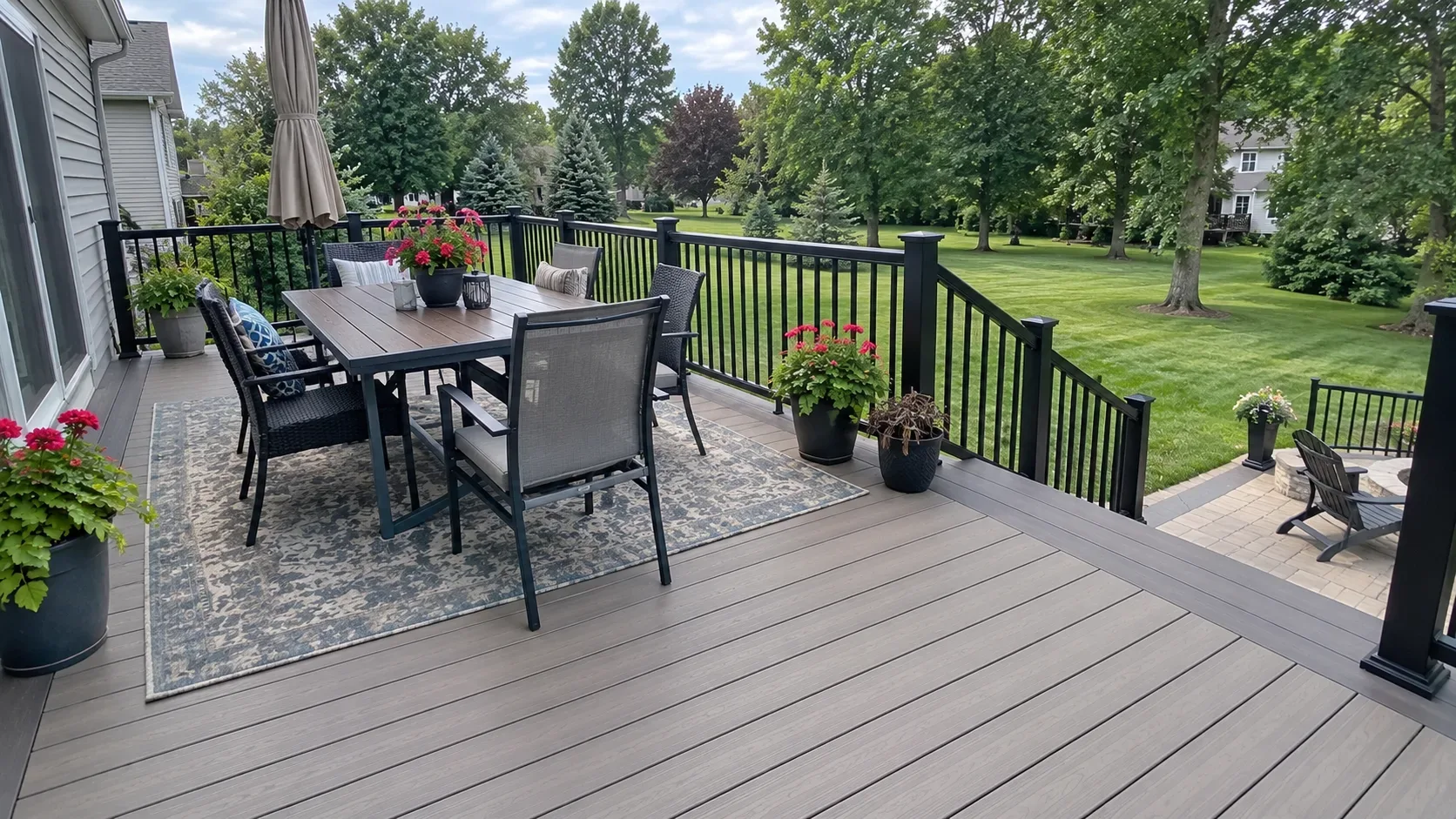
Multi Level Decks in Loveland, OH
When a yard tumbles away from the house, or the home has doors on two different floors, a single flat platform is the wrong answer. Stepped levels work with the fall and generally cost less than one very tall deck.
- Footings below the frost line
- Permits and inspections handled
- Written scope before we start
Multi Level Decks planning range for Loveland
Typical price range
From:$19,400To:$29,600
- Frame and decking$15,200–$22,000
- Railing, 52 ft$3,400–$5,000
- Stairs, 1 run$800–$2,600
Planning range, not a quote. It assumes a typical deck; very tall decks and hard access need a site visit before anyone can give a firm price.
Cincinnati Custom Decks plans multi level decks in Loveland, OH. A multi-level deck works when each level has a purpose, a safe transition and a structural plan.
Give every level a clear job
The scope should identify the elevations, stairs, landings, guard lines, posts, beams, drainage and how dining, grilling or hot-tub use is separated. Multiple levels need more than a larger single-deck frame.
Resolve grade and circulation first
Use site measurements to connect doors, walkouts and yard grade without awkward steps or trapped water. The framing plan must show load paths for every level before finishes cover it.
What changes for multi level decks in Loveland
Loveland has century homes near the Little Miami, newer subdivisions to the east and an address that can fall in more than one county. A Loveland mailing address may sit outside the city, which changes who reviews the project, and a lot near the river can add site constraints.
Loveland's Building Department takes permit applications in person or online, its Chief Building Official answers questions about deck projects, and the city asks applicants to confirm the property is inside city limits because a Loveland mailing address does not guarantee it. For this address, the first useful decision is to confirm which jurisdiction the parcel is in first, then confirm the permit path with the Chief Building Official before the footprint is fixed.
Research checkpoint for this Loveland project
Slopes and walkouts can make a multi-level layout safer and more useful, but they also add structural and drainage decisions. In Loveland, that concern meets a specific local condition: century homes near the Little Miami, newer subdivisions to the east and an address that can fall in more than one county. This changes the questions that belong in the first site visit.
Use the local grade and access pattern to decide whether separate levels solve a real use problem. The page research therefore asks one project-specific question: Is this property inside Loveland city limits, and which office issues the permit?
Local source: City of Loveland Building and Zoning. Checked October 11, 2026.
Questions for the first site visit
- What activity belongs on each level?
- How will stairs and guards connect the elevations?
- Where will water move between and below the levels?
- Is this property inside Loveland city limits, and which office issues the permit?
Multi Level Decks planning range for Loveland
Why homeowners pick Cincinnati Custom Decks
Footings below the frost line
The Ohio River valley swings above and below freezing all winter. Every post we set lands on a poured footing below the local frost depth, which is what keeps a deck level through a decade of heave and thaw.
Permits and inspections handled
We work out which department your address answers to, pull the permit, meet the inspector and hand you the signed card. An unpermitted deck becomes your problem the day you sell the house.
Written scope before we start
Materials, framing spec, hardware, timeline and price in writing before anybody swings a hammer. No verbal change orders.
Multi Level Decks questions we get asked
Is a multi level deck more expensive than a single level?
Per square foot, usually a little more, because the extra stairs, the extra guard and the additional footings all consume labour and material. As a whole project it is often less, because the alternative on falling ground is one very tall platform with long posts, heavy lateral bracing and a stair tower at one end. Working down with the slope removes most of that structure and most of that expense.
Why does my yard need a stepped deck?
Where the ground falls more than about two feet across the depth of the deck, one flat level either finishes awkwardly high at the far edge or needs a retaining wall beneath it to make sense. Steps follow the natural fall, hold every level close to the soil it covers, and create distinct zones instead of one large platform that has to be furnished in a single go.
Which county and which office issues my Loveland permit?
It depends on the address. Loveland reaches into Hamilton, Warren and Clermont Counties, and the City of Loveland runs its own Building and Zoning Department for work inside the city limits, so most in town builds are reviewed there. Cross into unincorporated township ground and the county office takes over. We confirm the jurisdiction before we price anything, because the same structure can need different setbacks, different drawings and a different inspection sequence depending on which side of a line the lot falls.
Does a lot near the Little Miami need floodplain review?
Often it does, and it is the first question rather than a late one. The Little Miami and its valley floor put a share of Loveland lots inside a regulated floodplain, and that finding can change the footprint, the finished height and the footing detail all at once. We check the map and, where it applies, the local review path before design, because a structure that has to move after the drawings are done is the expensive way to learn the answer.
What should be checked before hiring multi level decks in Loveland?
Confirm which jurisdiction the parcel is in first, then confirm the permit path with the Chief Building Official before the footprint is fixed. The builder should also confirm the scope, existing condition and the approval route before work starts. Use the local grade and access pattern to decide whether separate levels solve a real use problem.