
Cincinnati, OH and Greater Cincinnati
Wood Decks in Blue Ash, OH
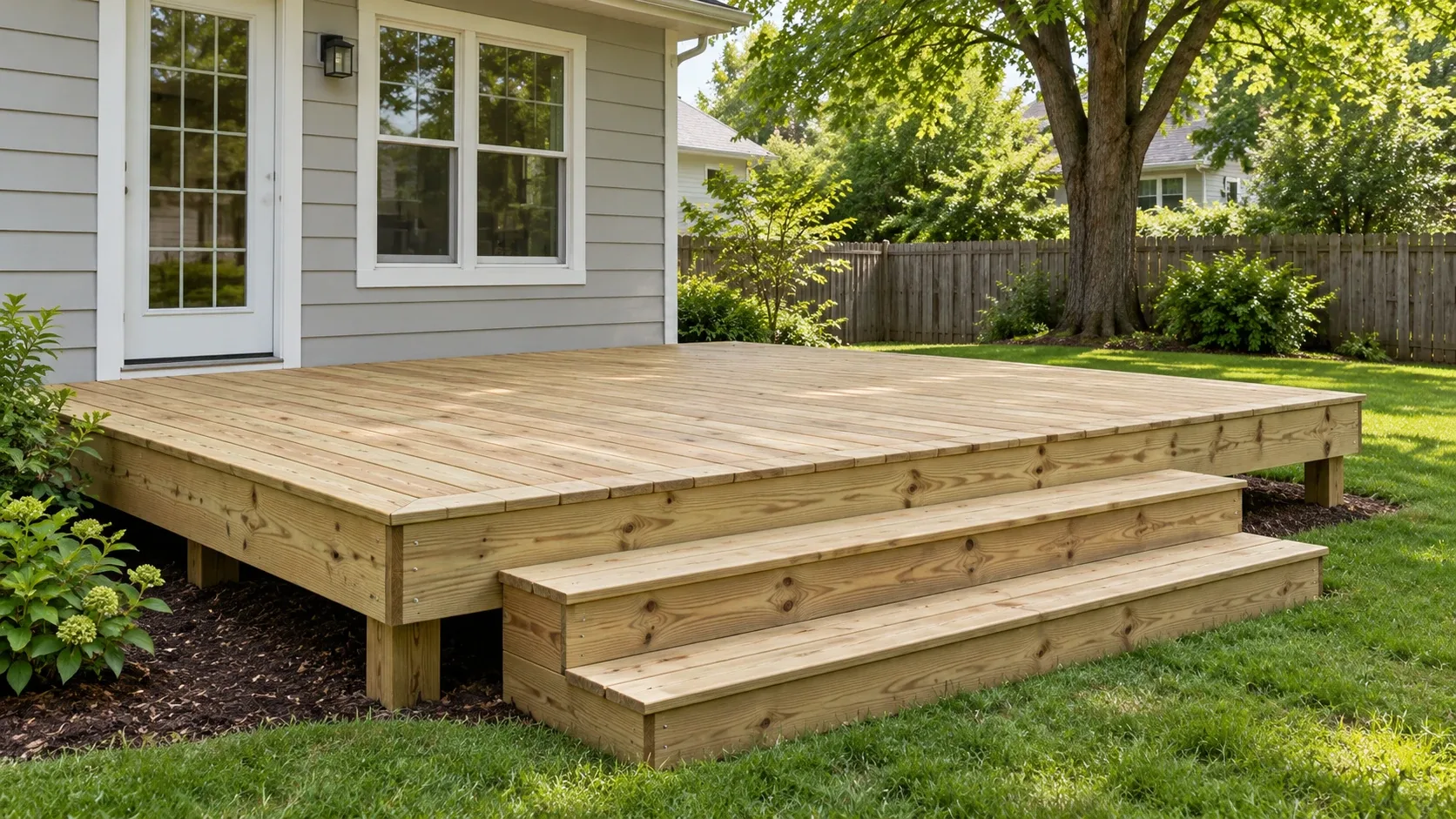
Real wood decks in pressure treated pine and cedar, framed properly and finished so they survive. The most deck you can buy for the money, as long as somebody seals it.
- Footings below the frost line
- Permits and inspections handled
- Written scope before we start
Wood Decks planning range for Blue Ash
Typical price range
From:$19,400To:$29,600
- Frame and decking$15,200–$22,000
- Railing, 52 ft$3,400–$5,000
- Stairs, 1 run$800–$2,600
Planning range, not a quote. It assumes a typical deck; very tall decks and hard access need a site visit before anyone can give a firm price.
Cincinnati Custom Decks plans wood decks in Blue Ash, OH. A wood deck gives a natural surface but needs species, detailing and maintenance choices that fit the site.
Choose wood with the frame and finish plan
The scope should name the lumber, board spacing, fasteners, framing, rail system, stairs and finish approach. Wood performs well when it can dry and when its maintenance is planned from the start.
Plan for movement, moisture and upkeep
Review shade, tree debris, drainage, sun exposure and the desired maintenance cycle. The material choice should fit the homeowner's tolerance for cleaning, staining and eventual board replacement.
What changes for wood decks in Blue Ash
Blue Ash has mature inner-suburb ranches and split levels, smaller back yards and decks that are usually replacements. A smaller back yard and an older house make the setbacks, the house connection and the footprint of a replacement worth checking before work is priced.
Blue Ash directs residents to its Community Development Department, and to the Fire Department for some work, to apply for and receive a permit. For this address, the first useful decision is to measure the existing deck and the lot, then confirm the permit path with Community Development before the replacement scope is fixed.
Research checkpoint for this Blue Ash project
Wood's lifespan changes sharply with moisture, shade, airflow and the care of the supporting frame. In Blue Ash, that concern meets a specific local condition: mature inner-suburb ranches and split levels, smaller back yards and decks that are usually replacements. This changes the questions that belong in the first site visit.
Use the local site condition to select a wood species and finish plan that can realistically be maintained. The page research therefore asks one project-specific question: Which department needs to see this project, and does the replacement keep the original footprint?
Local source: City of Blue Ash permit notice. Checked October 11, 2026.
Questions for the first site visit
- How quickly will the deck dry after rain?
- Which wood and finish suit the expected maintenance?
- Are the frame and fasteners specified for the selected boards?
- Which department needs to see this project, and does the replacement keep the original footprint?
Wood Decks planning range for Blue Ash
Why homeowners pick Cincinnati Custom Decks
Footings below the frost line
The Ohio River valley swings above and below freezing all winter. Every post we set lands on a poured footing below the local frost depth, which is what keeps a deck level through a decade of heave and thaw.
Permits and inspections handled
We work out which department your address answers to, pull the permit, meet the inspector and hand you the signed card. An unpermitted deck becomes your problem the day you sell the house.
Written scope before we start
Materials, framing spec, hardware, timeline and price in writing before anybody swings a hammer. No verbal change orders.
Wood Decks questions we get asked
What is the best wood for a deck in Blue Ash?
For most homeowners that is pressure treated southern yellow pine, because it delivers a structurally sound deck for the least money and it holds stain well. Western red cedar suits a project where appearance leads and the budget stretches roughly 40 percent further. Framing stays treated whatever surface you choose, with ground contact rated stock wherever a member sits near the ground.
How often does a wood deck need sealing here?
Every two to three years on the horizontal boards, and the first coat should wait until new lumber has dried, usually two to four months after the build rather than the following week. Blue Ash delivers freeze and thaw cycling, strong summer UV and rain in every month, which is harder on a finish than a dry climate or a mild one. A deck that has never been sealed will be checking and shedding splinters by year six.
Do I need a permit for a deck in Blue Ash?
Yes. Blue Ash issues its own permits through the city's Building Department at 513 745 8522, and a building permit application automatically includes the zoning review. On these smaller lots the setback and lot coverage checks decide more than people expect, so we confirm what will fit at the rear property line before a drawing is made. Blue Ash lists new porches and decks among the projects that need a building permit. For a small freestanding deck, call the Building Department first to check whether the state exemption for a detached deck of 200 square feet or less, no more than 30 inches above grade and not serving an exit applies.
Can you keep the old frame and just replace the decking?
Often yes, and it is the question worth asking before a rebuild is priced. The decking is only the surface. What matters is the ledger at the house, the joists, the beam and how the posts are founded. On a mature Blue Ash property we open the underside and look at all four. If the frame is sound and the joist spacing suits a modern board, re decking in cedar or a composite gives most of a new deck for around a third of a rebuild. If the ledger was nailed and never flashed, the wall behind it becomes part of the job whether anyone planned for that or not.
What should be checked before hiring wood decks in Blue Ash?
Measure the existing deck and the lot, then confirm the permit path with Community Development before the replacement scope is fixed. The builder should also confirm the scope, existing condition and the approval route before work starts. Use the local site condition to select a wood species and finish plan that can realistically be maintained.